

It’s exam season again, and your notes are a mess, your coffee is cold, and you’ve read the same paragraph four times without absorbing a word of it. Sound familiar?
Most exam preparation advice tells you to “just study harder.” That’s not wrong, exactly, but it’s not that useful either. What actually moves the needle is studying differently — with methods that match how your brain actually stores information, not just how many hours you clock at a desk.
This isn’t a list of vague motivational tips. It’s the stuff that genuinely changes how well you retain material and how calm you feel walking into the exam room.
Why the Usual Advice Falls Flat
Rereading your textbook feels like studying. Highlighting entire pages in yellow feels like studying. Copying notes over and over feels like studying.
None of it actually is, at least not in the way that counts.
These methods are passive. Your eyes move across the page, your brain nods along, and an hour later you couldn’t reconstruct half of what you “learned” if someone asked you to explain it out loud. That gap between feeling prepared and being prepared is where most exam stress comes from.
Real exam preparation means forcing your brain to retrieve information, not just recognize it. That distinction matters more than almost anything else in this article.
Build a Study Plan You’ll Actually Follow
A study schedule sounds like homework about homework. Nobody’s excited to make one. But this is genuinely the difference between calmly working through material and cramming everything into the final 48 hours.
Skip the elaborate color-coded spreadsheet if that’s not your style. A working plan just needs a few things:
- Every subject and topic broken down into specific chunks — “review the causes of WWI,” not “study history”
- Each chunk assigned to an actual day, not a vague week
- A couple of buffer days built in, because something will always eat into your schedule
- Rest days that are actually rest days, not secretly study days in disguise
The plan doesn’t need to be perfect. It just needs to exist somewhere other than your head.
How Many Days Before an Exam Should You Actually Start?
There’s no single right answer here, but two to three weeks tends to work well for most students covering a full syllabus. That gives your brain enough time to revisit material more than once, which matters more than people realize.
If you’re down to a few days, don’t spiral. Triage. Figure out which topics are most likely to show up and hit those first, then fill in the gaps if you have time left over.
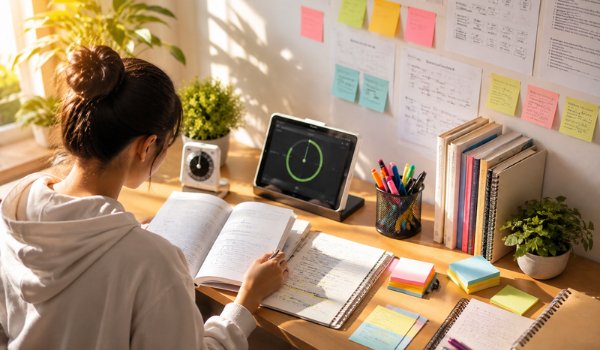
The Study Techniques Worth Your Time
Not all studying is created equal. Two students can spend the exact same three hours prepping and walk out with wildly different results, because one of them is actually using techniques that build memory.
Active recall is the big one. Instead of rereading your notes, close them. Try to write down everything you remember about the topic from scratch. Then check what you got wrong or missed entirely.
It feels harder than rereading. It’s supposed to. That struggle to pull information out of your memory is exactly what strengthens it. Flashcards, blank-page brain dumps, and practice questions all work through this same mechanism. If you want a more detailed breakdown of how to put this into practice, this guide on studying effectively for exams walks through it step by step.
Spaced repetition is the other one worth knowing. Instead of studying a topic once for three hours, you study it briefly today, come back to it in a few days, then again the following week. Spreading it out like this beats one long cramming session almost every time, because your brain needs repeated exposure over time to actually hold onto information long-term.
There’s a lot more beyond just these two — this rundown of study techniques for students covers several others worth trying depending on your subject and learning style.
Memorizing Things Without Losing Your Mind
Some subjects just require raw memorization. Dates, formulas, vocabulary lists, anatomy terms — there’s no getting around it for certain classes.
A few things make this less painful:
Break long lists into smaller chunks instead of trying to memorize them as one giant block. Your brain handles groups of five or six far better than a wall of twenty.
Turn boring facts into something ridiculous. Silly acronyms and made-up phrases stick precisely because they’re weird — your brain pays more attention to the unusual.
Try explaining a concept out loud, like you’re teaching it to a friend who’s never heard of it. If you stumble or get vague, that’s usually a sign you don’t know it as well as you thought.
Diagrams and mind maps help too, especially for subjects that are naturally visual or interconnected. For a deeper dive into memorization specifically, this guide on memorizing faster for exams is worth reading.
Dealing With Procrastination (Because Everyone Does It)
Procrastination isn’t laziness. Usually it means the task in front of you feels too big, too boring, or too vague to start.
A few things that actually help:
Break the task down until it’s almost embarrassingly small. “Study for the exam” is paralyzing. “Go through 15 flashcards” is not.
Set a short timer — 25 minutes is a common sweet spot — and work with your phone in another room. Not on silent. In another room. The temptation to check it is the whole problem.
Give yourself permission to start badly. You don’t need to feel motivated to begin. Motivation usually shows up after you start, not before.
And when you finish a chunk, actually take the break. Watch something, walk outside, whatever. Pretending you’ll push through without rest usually backfires by hour two.
Handling Exam Anxiety
A bit of nervousness before an exam is completely normal, and honestly it can sharpen your focus. Too much of it, though, works against you.
Sleep is bigger than most students give it credit for. Memory consolidates while you’re asleep, so pulling an all-nighter to cram often does more harm than good — you might recognize more facts, but you’ll think less clearly and recall less overall.
Practicing under timed, exam-like conditions removes a lot of the surprise on the actual day. Once you’ve sat through a mock version of the pressure, the real thing feels more familiar than terrifying.
Simple things help too — a short walk, a few slow breaths before you start, or just talking to a friend or parent about how you’re feeling. None of it eliminates nerves completely, but it keeps them from taking over.
And try to remember one exam is a single data point, not a verdict on how smart or capable you are.
The Night Before and Exam Day
The night before an exam is not the time to learn new material. It’s too late for that anyway, and trying usually just adds panic without adding knowledge.
Instead, do a light pass over your key notes, pack your bag ahead of time, set two alarms instead of one, and get to bed at a reasonable hour. Boring advice, but it works.
On exam morning, eat something even if your stomach’s in knots. Skim your notes briefly if it helps you feel settled, but resist the urge to cram anything new. Leave earlier than you think you need to, so a delayed bus or lost parking spot doesn’t turn into a full-blown crisis. And take a few deep breaths before you walk through the door.
Mistakes That Quietly Sabotage Exam Prep
A few habits trip up even well-meaning students:
Studying without ever testing yourself keeps you in that comfortable-but-ineffective rereading loop. Splitting focus between your notes and your phone cuts retention more than most people realize, even if it feels like you’re “still getting stuff done.” Skipping sleep to fit in more hours usually backfires by exam time. Treating every topic as equally important wastes time that could go toward higher-yield material. And waiting until the final few days turns preparation into damage control instead of steady progress.
None of these mistakes are dramatic on their own. But stacked together, they’re usually the real reason a smart, hardworking student still walks out of an exam feeling unprepared.
Final Thoughts
Good exam preparation isn’t about being naturally gifted or having unlimited free time. It comes down to using the time you do have well — a realistic plan, active recall instead of passive rereading, actual sleep, and a bit of patience with yourself along the way.
If you want more practical guidance without the fluff, Trafily has deeper breakdowns on study techniques, studying effectively for exams, and memorizing faster.
Start with one small session today. That’s usually all it takes to get moving.
