
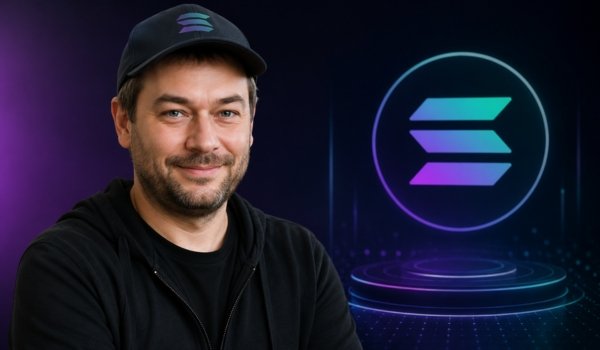
Anatoly Yakovenko is the co-founder and CEO of Solana Labs, the organization behind one of the fastest and most widely used blockchain networks in the world. A former Qualcomm and Dropbox engineer, Yakovenko invented Proof of History—the cryptographic mechanism that gives Solana its speed advantage over competing blockchains.
Few figures in the cryptocurrency space have had as direct and measurable an impact on blockchain infrastructure as Anatoly Yakovenko. He didn’t enter crypto as a speculator or an idealist. He came in as an engineer with a very specific problem to solve: why are blockchains so slow? The answer he arrived at—and the protocol he built around it—changed the landscape of decentralized technology permanently.
This post covers Yakovenko’s background, his core technical contribution to blockchain, how Solana grew from a whitepaper into a global network, and why his work continues to matter for developers, investors, and anyone building in the Web3 space.
From Qualcomm to Crypto: What Shaped Anatoly Yakovenko’s Engineering Mindset
Anatoly Yakovenko was born in Ukraine and later moved to the United States, where he studied computer science at the University of Illinois Urbana-Champaign. After graduating, he joined Qualcomm—one of the world’s largest semiconductor and telecommunications companies—where he spent roughly 13 years working on operating systems and distributed computing systems.
That stint at Qualcomm was formative. Working at the hardware level, Yakovenko developed an intimate understanding of how systems handle time, synchronization, and data throughput at scale. These aren’t abstract concerns—they’re the nuts and bolts of why some systems are fast and others are bottlenecked. He later spent time at Dropbox and Mesosphere, deepening his expertise in distributed systems.
By late 2017, Yakovenko had grown increasingly frustrated with the performance limitations of existing blockchains. Bitcoin could process roughly 7 transactions per second. Ethereum was only marginally better. For context, Visa processes around 1,700 transactions per second on average. The gap wasn’t just inconvenient—it made blockchains commercially unviable for most real-world applications. Yakovenko believed the core problem wasn’t consensus algorithms. It was time.
The Invention That Changed Everything: What Is Proof of History and Why Did Yakovenko Create It?
In November 2017, Yakovenko published the original Solana whitepaper, introducing a concept he called Proof of History (PoH). The idea was deceptively simple but technically profound: rather than having validators spend time agreeing on when something happened, encode the passage of time directly into the blockchain’s data structure.
Traditional blockchains require every node in the network to agree on a timestamp before a transaction is confirmed. This coordination takes time and creates throughput bottlenecks. Proof of History sidesteps this by using a verifiable delay function—a cryptographic clock that generates a unique hash sequence, where each hash proves that a specific amount of time has passed since the last one. Validators don’t need to debate order. The ledger itself contains a verifiable record of sequence and time.
The practical result was dramatic. Solana can theoretically process up to 65,000 transactions per second, with average transaction fees of a fraction of a cent. That’s not a modest improvement over Ethereum or Bitcoin—it’s a different category of performance entirely. Yakovenko’s insight was essentially to import concepts from operating system design—specifically from how CPUs manage time and task scheduling—and apply them to distributed ledger technology.
You can read the original Solana whitepaper here to understand the full technical architecture: https://solana.com/solana-whitepaper.pdf
How Anatoly Yakovenko Co-Founded Solana Labs and Grew It Into a Top Blockchain Network
After publishing the whitepaper, Yakovenko began building. He reached out to former Qualcomm colleague Greg Fitzgerald, who became the first person to implement the protocol in Rust—the programming language that would become central to Solana’s developer ecosystem. The two were later joined by Raj Gokal, who became COO and took on the business and ecosystem development side of the company, and several other engineers from Qualcomm and other major tech firms.
Solana Labs was formally incorporated in 2018, and the Solana mainnet launched in March 2020. The timing, while coinciding with a turbulent global environment, turned out to be strategically significant. As the NFT boom and DeFi (decentralized finance) explosion accelerated through 2020 and 2021, Solana’s speed and low fees made it a natural destination for developers who found Ethereum’s gas fees prohibitive.
By late 2021, Solana’s native token SOL had climbed to an all-time high of over $250, and the network had attracted major projects across NFTs, gaming, payments, and decentralized exchanges. Solana Labs raised $314 million in a funding round led by Andreessen Horowitz and Polychain Capital in June 2021—a clear signal of institutional confidence in Yakovenko’s technical vision.
What Challenges Has Solana Faced, and How Has Yakovenko Responded to Network Criticism?
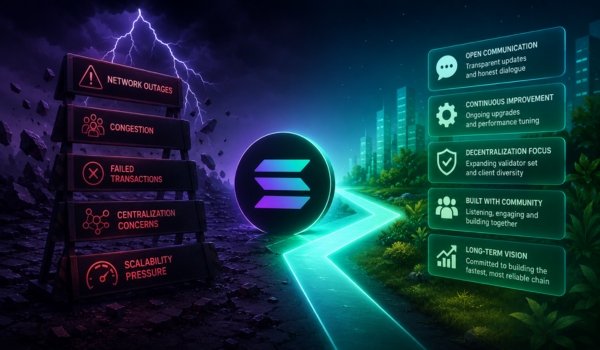
No honest account of Yakovenko’s work can ignore the challenges Solana has faced. The network has experienced several significant outages since its mainnet launch, including a 17-hour outage in September 2021 caused by a surge in transaction volume from a bot-driven NFT mint. There have been additional outages in 2022 and 2023, each drawing criticism from developers and competitors who questioned the network’s reliability.
Yakovenko has been notably direct in responding to these criticisms—on social media, in interviews, and in technical forums. Rather than deflecting, he has consistently acknowledged the issues, explained their root causes, and outlined specific engineering solutions. His communication style is unusual for a founder of his stature: he engages with critics directly on X (formerly Twitter), often in technical detail, and doesn’t shy away from admitting when something broke and why.
The FTX collapse in November 2022 dealt a significant blow to Solana, partly because FTX and its founder Sam Bankman-Fried had been highly visible Solana advocates. SOL’s price dropped sharply in the aftermath. Yet Solana’s ecosystem didn’t collapse. Developer activity remained strong, and by 2023 and into 2024, the network staged a substantial recovery—both in price and in on-chain activity metrics. Much of that resilience reflects the quality of the underlying infrastructure that Yakovenko’s team built.
What Anatoly Yakovenko Believes About the Future of Decentralized Technology and Blockchain Scalability
Yakovenko’s public positions on the future of blockchain are worth understanding, because they shape where Solana is heading. He has been a consistent advocate for high-performance, general-purpose blockchains—as opposed to the Layer 2 scaling approach popularized in the Ethereum ecosystem. His view is that base-layer performance matters enormously, and that offloading transactions to secondary networks introduces complexity and fragmentation that ultimately harms the user experience.
He has also spoken extensively about the importance of mobile access to blockchain. In 2022, Solana Labs launched the Saga phone—an Android device with a built-in crypto wallet and a dedicated app store for decentralized applications. The device was a commercial risk, but it reflected Yakovenko’s conviction that crypto can’t reach mainstream adoption if it remains tethered to desktop browsers and hardware wallets. A second-generation Solana phone, the Chapter 2, was subsequently announced, suggesting the mobile bet is ongoing.
On the developer side, Yakovenko has pushed for Solana to be the easiest high-performance blockchain to build on. The Solana ecosystem now includes a robust set of developer tools, documentation, and programs like the Solana Foundation’s grant initiatives. Yakovenko has repeatedly said his goal is for Solana to function like a global decentralized computer—fast enough, cheap enough, and reliable enough to run applications that billions of people actually use.
For developers interested in building on Solana, the official developer documentation offers a comprehensive starting point: https://solana.com/developers
Why Anatoly Yakovenko’s Contribution to Blockchain Architecture Matters Beyond Solana
It would be a mistake to evaluate Yakovenko’s contribution purely through the lens of Solana’s token price or market position. His real contribution is architectural. Proof of History demonstrated that the consensus bottleneck in blockchain design was not inevitable—it was a solvable engineering problem. That demonstration forced the entire industry to think harder about performance at the base layer.
Ethereum’s subsequent push toward proof-of-stake and its roadmap for higher throughput didn’t happen in a vacuum. Competition from high-performance chains like Solana created genuine pressure to improve. Yakovenko, by building something demonstrably faster, shifted what developers and users considered acceptable. That influence extends beyond Solana’s own ecosystem.
He also represents a particular kind of founder: deeply technical, product-focused, and skeptical of hype. In an industry prone to overpromising, Yakovenko has consistently oriented his public commentary around engineering specifics—benchmarks, code, architecture—rather than vague promises about disruption. For a space that has often struggled with credibility, that approach matters.
A useful overview of how Solana compares to other leading blockchains can be found here: https://solana.com/learn/blockchain-basics
What’s Next for Anatoly Yakovenko and the Solana Ecosystem?
Solana’s roadmap as of 2024 includes continued work on network stability, the Firedancer validator client (developed independently by Jump Crypto), and expanding the mobile and consumer-facing side of the ecosystem. Firedancer, in particular, is significant—it’s a complete reimplementation of the Solana validator in C++, designed to dramatically increase throughput and resilience. Yakovenko has described it as one of the most important infrastructure projects in Solana’s history.
Beyond technical upgrades, Yakovenko has shown increasing interest in payments as a near-term use case. Solana Pay, the network’s open-source payments framework, has already been integrated by Shopify, allowing merchants to accept SOL and USDC as payment. If that infrastructure matures at scale, it could represent one of the most tangible real-world applications of blockchain technology to date.
The Bigger Picture: Why Anatoly Yakovenko’s Story Matters for the Future of Blockchain
Anatoly Yakovenko’s career is a case study in what happens when rigorous engineering discipline meets a genuine market gap. He didn’t invent blockchain. He didn’t launch the first smart contract platform. What he did was identify a structural constraint that everyone else had accepted as fixed, and then systematically remove it.
The result—Solana—is now one of the most actively developed blockchain networks in the world, with thousands of projects, millions of users, and an architecture capable of supporting applications that would be technically or economically impossible on slower chains. Whether Solana ultimately becomes the dominant global blockchain or one of several major protocols, Yakovenko’s contribution to the field is already permanent.
For anyone building in Web3, studying distributed systems, or simply trying to understand why some blockchains are faster than others, Yakovenko’s work is essential reading.
Frequently Asked Questions About Anatoly Yakovenko and Solana
Who is Anatoly Yakovenko and what did he create?
Anatoly Yakovenko is the co-founder and CEO of Solana Labs. He created Proof of History, a cryptographic timekeeping mechanism that enables the Solana blockchain to process up to 65,000 transactions per second—significantly faster than Bitcoin or Ethereum.
What is Proof of History and how does it differ from Proof of Work?
Proof of History is a verifiable delay function that encodes the passage of time directly into the blockchain, eliminating the need for validators to coordinate on timestamps. Proof of Work, by contrast, requires nodes to solve computational puzzles to validate transactions. Proof of History is not a consensus mechanism on its own—Solana uses it alongside Proof of Stake to achieve both speed and security.
Where did Anatoly Yakovenko work before founding Solana?
Yakovenko spent approximately 13 years at Qualcomm, working on operating systems and distributed computing. He later worked at Dropbox and Mesosphere before publishing the Solana whitepaper in November 2017.
Why has Solana experienced network outages, and what has been done to fix them?
Solana’s outages have generally been caused by extreme spikes in transaction volume—often from automated bots—that overwhelmed validator memory. Solana Labs has addressed these issues through software upgrades and improved transaction fee markets. The independent Firedancer validator client, developed by Jump Crypto, is expected to further increase resilience.
Is Solana a good blockchain for developers to build on?
Solana is particularly well-suited for developers building applications that require high throughput and low transaction costs—such as payments, gaming, DeFi, and NFT platforms. The tradeoff is a steeper learning curve compared to Ethereum’s more mature developer tooling. Developers can get started at solana.com/developers.
