

Vitalik Buterin is the Canadian-Russian programmer who co-founded Ethereum in 2013 at age 19. Ethereum is the world’s second-largest blockchain by market capitalization, best known for introducing smart contracts and enabling the decentralized finance (DeFi) and NFT ecosystems. Buterin remains one of the most influential voices in blockchain technology today.
You don’t need to follow cryptocurrency closely to have heard the name. Vitalik Buterin has become something of a cultural phenomenon—a soft-spoken, hoodie-wearing prodigy who helped reshape the financial internet before he turned 25. But beyond the headlines and the memes, there’s a genuinely fascinating story about a young person with a big idea, a willingness to challenge established thinking, and an unusual level of intellectual honesty about the limitations of his own creation.
This article covers everything you need to know about Vitalik Buterin: where he came from, what he built, what he believes, and why his decisions continue to influence the direction of blockchain technology for millions of people around the world.
Whether you’re a crypto beginner trying to understand Ethereum or a seasoned developer curious about the philosophy behind it, there’s something here for you.
Who Is Vitalik Buterin and Where Did He Come From?
Vitalik Buterin was born on January 31, 1994, in Kolomna, Russia. His family emigrated to Canada when he was six years old, settling in Toronto. From an early age, Buterin displayed an aptitude for mathematics and economics that set him apart from his peers—his third-grade teacher reportedly placed him in a class for gifted children after noticing his exceptional ability to calculate three-digit numbers in his head.
His entry into the world of cryptocurrency came through an unexpected source: online gaming. Buterin was an avid World of Warcraft player until 2010, when developer Blizzard Entertainment removed the damage component from his favorite character’s spell. The experience left him rattled—not because of the game itself, but because of what it revealed about centralized control. A single company had the power to change rules that affected millions of players, with no recourse for those players whatsoever. That realization planted a seed.
Shortly after, Buterin’s father introduced him to Bitcoin. He was skeptical at first, but the more he read, the more he became convinced that decentralized digital currency represented something genuinely new. By 2011, at age 17, Buterin was writing articles about Bitcoin for a blog, eventually co-founding Bitcoin Magazine—one of the first serious publications dedicated to cryptocurrency journalism.
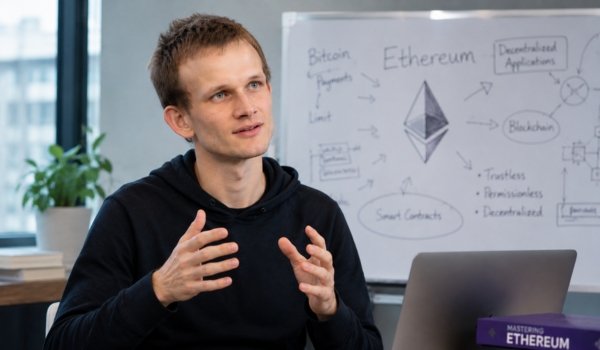
What Led Vitalik Buterin to Create Ethereum?
By 2012, Buterin had enrolled at the University of Waterloo in Ontario, studying computer science. But academia couldn’t hold his attention for long. He was spending more and more time traveling the world, meeting developers and thinkers working on blockchain projects, and growing increasingly frustrated with Bitcoin’s limitations.
Bitcoin, Buterin realized, was essentially a single-purpose tool. It was excellent at recording and transferring value, but its scripting language was intentionally limited. Building decentralized applications on top of Bitcoin felt like trying to write a novel using only 50 words.
In late 2013, Buterin dropped out of university and wrote what would become one of the most consequential technical documents in the history of software: the Ethereum White Paper. The core idea was elegant. Rather than building another single-purpose blockchain, Buterin proposed a general-purpose programmable blockchain—a platform where developers could write and deploy “smart contracts,” self-executing pieces of code that could automate any kind of agreement or transaction without requiring a trusted third party.
You can read the original Ethereum White Paper on the official Ethereum Foundation website: ethereum.org/en/whitepaper
Buterin shared the paper with a small group of friends and developers. The response was immediate. Rather than finding flaws in his reasoning, people kept coming back with new ideas for what they could build on such a platform. In early 2014, Buterin announced Ethereum publicly at the North American Bitcoin Conference in Miami. The project raised over $18 million through a crowdfunding campaign, and Ethereum’s mainnet officially launched on July 30, 2015.
How Did Ethereum Change the Blockchain Landscape?
The launch of Ethereum fundamentally shifted what people believed blockchains could do. Before Ethereum, the dominant use case for blockchain technology was peer-to-peer payments. After Ethereum, the conversation expanded dramatically.
Smart contracts made it possible to build decentralized applications (dApps) directly on a blockchain. Developers no longer needed to trust a centralized company to run their application’s backend—the code ran on the Ethereum network itself, maintained by thousands of nodes around the world. This gave rise to entirely new categories of software:
Decentralized Finance (DeFi) platforms like Uniswap and Aave allowed users to lend, borrow, and trade crypto assets without banks or brokers. By 2021, the total value locked in DeFi protocols had surpassed $100 billion, according to data from DeFi Pulse.
Non-Fungible Tokens (NFTs) leveraged Ethereum’s ERC-721 token standard to create verifiable digital ownership. The NFT market reached a peak trading volume of approximately $17 billion in 2021, according to a report by NonFungible.com.
Decentralized Autonomous Organizations (DAOs) used smart contracts to coordinate group decision-making and resource allocation without traditional corporate structures. From grant-giving organizations to investment collectives, DAOs introduced a new model for human coordination.
None of these innovations would have been possible—or at least not in the same form—without the programmable foundation that Buterin’s Ethereum provided.
What Does Vitalik Buterin Actually Believe About Blockchain and Decentralization?
One of the qualities that distinguishes Buterin from most figures in the cryptocurrency space is his willingness to publicly question and critique the very ecosystem he helped create. His personal blog at vitalik.eth.limo is a rich archive of essays covering topics from cryptographic theory to political philosophy, and it offers a window into a mind that refuses to settle into comfortable orthodoxy.
Buterin has been consistently skeptical of hype cycles. During the 2017 ICO (Initial Coin Offering) boom, when thousands of projects raised billions of dollars based on little more than a white paper, he publicly expressed concern about the lack of substance behind many of these ventures. He has also written critically about NFTs, the metaverse, and other blockchain trends—not to dismiss them entirely, but to ask harder questions about whether the technology was actually solving real problems.
His political and economic views are equally unconventional. Buterin has written favorably about concepts like quadratic voting, funding mechanisms that reduce the outsized influence of wealthy donors on public goods, and “soulbound tokens”—non-transferable digital credentials that could represent identity and reputation on a blockchain without being bought or sold. These ideas reflect a broader concern: that decentralized systems can reproduce the same inequality and power imbalances as centralized ones if their design isn’t carefully considered.
What Is the Ethereum Merge, and Why Did Vitalik Buterin Consider It His Greatest Achievement?
For years, Ethereum operated on a Proof of Work (PoW) consensus mechanism—the same energy-intensive system used by Bitcoin, where miners compete to solve mathematical puzzles to validate transactions. Buterin had long argued that this approach was environmentally unsustainable and that Ethereum needed to transition to Proof of Stake (PoS), a system where validators stake their own ETH as collateral to participate in block validation.
This transition—known as “the Merge”—was one of the most technically complex upgrades ever attempted on a live blockchain. It took years of research and development, involving hundreds of engineers and researchers across the Ethereum ecosystem. On September 15, 2022, the Merge was completed successfully. Ethereum’s energy consumption dropped by approximately 99.95%, according to the Ethereum Foundation’s own estimates.
Buterin has described the Merge as his proudest achievement. The difficulty wasn’t just technical. Coordinating the transition across thousands of independent node operators, developers, and stakeholders—without a central authority to enforce compliance—was a governance challenge unlike almost anything attempted in open-source software development.
You can find the full technical documentation for the Merge on the official Ethereum developer portal: ethereum.org/en/roadmap/merge
What Is Vitalik Buterin Working on Now, and What Is the Future of Ethereum?
Buterin remains actively involved in Ethereum’s ongoing development, though the project has long since grown beyond any single person’s direct control. His current focus areas include Ethereum’s continued scaling roadmap—specifically a multi-phase plan to dramatically increase the network’s transaction throughput while maintaining decentralization and security.
Key components of this roadmap include:
- Danksharding, a technical upgrade designed to make Ethereum’s data availability layer significantly more efficient, enabling Layer 2 rollups to process far more transactions at lower cost.
- The Verge, a phase focused on making Ethereum nodes easier to run through the introduction of Verkle trees, which reduce the storage requirements for validators.
- Account abstraction, a set of improvements that would make Ethereum wallets more flexible and user-friendly, potentially enabling features like social recovery and transaction batching without specialized hardware.
Beyond the technical roadmap, Buterin has used his influence and his personal wealth—he was reported to be worth approximately $1.5 billion at Ethereum’s peak valuation in 2021—to support public goods funding and charitable causes. In 2021, he donated approximately $1.14 billion in crypto assets, including a significant portion of the SHIB memecoin that had been sent to his wallet unsolicited, to COVID relief efforts in India and other causes.
What Can We Learn from Vitalik Buterin’s Approach to Building Technology?
What makes Buterin’s story compelling extends beyond the technology itself. His career offers a model for how to think about building systems that affect large numbers of people.
First, Buterin has consistently prioritized intellectual honesty over self-promotion. In an industry where founders routinely overstate the capabilities of their products, Buterin has been unusually candid about Ethereum’s limitations—its scaling challenges, its governance difficulties, and the ways in which its ecosystem has fallen short of its original ideals.
Second, he has remained deeply engaged with the communities that use and build on Ethereum, even as the project has grown to involve tens of thousands of developers and billions of dollars in economic activity. His public writing, his participation in conferences, and his ongoing research contributions reflect a belief that leadership in a decentralized ecosystem requires persuasion and demonstration, not authority.
Third, Buterin’s work illustrates what happens when technical expertise is combined with genuine philosophical curiosity. Ethereum’s design was never purely about solving a computer science problem. It was also an attempt to answer political and economic questions about trust, power, and how human beings can coordinate without relying on institutions they may not fully trust.
The Long View on Vitalik Buterin and Ethereum’s Place in Technology History
Vitalik Buterin is 30 years old. By any reasonable measure, Ethereum is still a young project. The infrastructure being built today—the rollups, the zk-proofs, the interoperability protocols—represents an early chapter in what could become a foundational layer of the internet’s financial and coordination systems.
Whether Ethereum ultimately achieves the vision Buterin outlined in that 2013 white paper, or gets eclipsed by newer approaches, its influence on how developers think about trust, programmability, and decentralization is already permanent. Buterin helped demonstrate that blockchains could be more than ledgers—that they could be platforms for building new kinds of institutions.
That idea, regardless of what happens to Ethereum specifically, has changed the landscape of technology in ways that are still unfolding.
Frequently Asked Questions About Vitalik Buterin
Who is Vitalik Buterin, and what is he known for?
Vitalik Buterin is a Canadian-Russian programmer best known for co-founding Ethereum, the world’s second-largest blockchain platform. He published the Ethereum White Paper in 2013 at age 19 and has since become one of the most influential figures in cryptocurrency and decentralized technology.
How old was Vitalik Buterin when he created Ethereum?
Buterin was 19 years old when he wrote the Ethereum White Paper in late 2013. Ethereum’s mainnet officially launched on July 30, 2015, when he was 21.
What is the difference between Ethereum and Bitcoin, according to Vitalik Buterin?
Buterin designed Ethereum to go beyond Bitcoin’s primary function of recording financial transactions. Ethereum is a programmable blockchain, meaning developers can write and deploy smart contracts—self-executing code that can automate agreements and power decentralized applications without a central authority.
What did the Ethereum Merge accomplish?
The Ethereum Merge, completed on September 15, 2022, transitioned Ethereum from an energy-intensive Proof of Work system to a Proof of Stake consensus mechanism. According to the Ethereum Foundation, this reduced Ethereum’s energy consumption by approximately 99.95%.
What is Vitalik Buterin’s net worth?
At Ethereum’s peak valuation in 2021, Buterin’s holdings were estimated to be worth approximately $1.5 billion. He has donated a significant portion of his crypto assets to charitable causes, including approximately $1.14 billion in 2021 to COVID relief and other philanthropic efforts.
Where can I read Vitalik Buterin’s writing and ideas?
Buterin publishes essays, research notes, and commentary on his personal blog at vitalik.eth.limo. Topics range from blockchain economics to political philosophy and governance design.
