
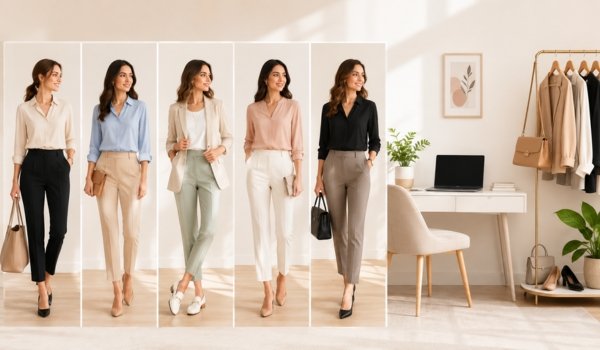
Business casual for women is a dress code that balances professionalism with comfort. It typically includes tailored trousers, blouses, midi skirts, blazers, and clean footwear like loafers or block heels. The exact interpretation varies by industry and workplace, but the goal is always to look polished without the formality of a full suit.
Getting dressed for work sounds simple—until you’re staring at your closet at 7 a.m., unsure whether your outfit reads “professional” or “too casual.” Business casual has long been one of the most misunderstood dress codes, especially for women. Unlike men, who can rely on a fairly consistent formula (chinos, button-down, no tie), women navigate a far wider range of options. That freedom is both a gift and a source of genuine confusion.
The challenge is that “business casual” doesn’t have a universal definition. What’s acceptable in a creative agency in Los Angeles may be completely different from what’s expected at a law firm in New York. Add to that the rapid evolution of workplace culture post-pandemic—where remote work and hybrid schedules have blurred the lines between comfort and professionalism—and it’s no wonder so many women feel uncertain about how to dress.
This guide breaks down everything you need to know about business casual for women. From the essential wardrobe pieces to the common mistakes to avoid, you’ll walk away with a clear, practical understanding of how to build a work wardrobe that’s both polished and authentically yours.
What Are the Core Pieces Every Woman Needs in a Business Casual Wardrobe?
Building a business casual wardrobe doesn’t require starting from scratch or spending a fortune. The key is identifying a core set of versatile pieces that can be mixed and matched across multiple outfits. Think of it as building a foundation—once the basics are in place, everything else becomes easier.
Tailored trousers are arguably the most essential item. A well-fitted pair in a neutral color—black, navy, camel, or charcoal—works across almost every business casual setting. The fit matters more than the price tag. Trousers that are too baggy or too tight will undermine even the most thoughtful outfit. Similarly, a blazer is one of the most transformative pieces in a professional wardrobe. Throw one over a simple blouse or a fitted turtleneck, and the entire look shifts from casual to polished instantly.
Blouses and button-down shirts are the workhorses of business casual dressing. Opt for fabrics that hold their shape throughout the day—silk, cotton, and ponte knit are all solid choices. Avoid anything too sheer or overly embellished for standard office settings, unless your workplace culture specifically supports it.
Midi skirts and tailored dresses are excellent alternatives to trousers. A wrap dress, for instance, is flattering on most body types and can take you from a morning meeting to an after-work dinner without any changes. Pencil skirts in classic colors are another reliable option—they photograph well, pair easily, and always look intentional.
For footwear, loafers, block heels, and pointed-toe flats are the go-to choices. They strike the right balance between comfort and formality. Stilettos aren’t necessary, and overly casual options like sneakers or flip-flops generally fall outside the business casual range (though this depends heavily on the workplace).
Why Does Business Casual Look Different Across Industries—and How Should Women Adapt?
Not all offices have the same expectations, and understanding the culture of your industry is just as important as knowing general business casual rules. A financial services company and a tech startup might both call their dress code “business casual,” but the day-to-day reality in each office can look completely different.
In conservative industries—banking, law, finance, and corporate consulting—business casual for women leans closer to formal. Think structured blazers, tailored trousers or knee-length skirts, modest necklines, and closed-toe shoes. Color palettes tend to stay within neutrals. The goal is to convey competence and authority, so clothing choices should be deliberate and understated.
Creative industries, on the other hand, offer considerably more flexibility. In fields like marketing, advertising, fashion, and media, business casual allows for more personality. Bold colors, interesting textures, statement accessories, and even well-fitted jeans (particularly dark-wash, straight-leg styles) can all fall within acceptable range. Self-expression through clothing is often seen as a positive signal in these environments.
Healthcare, education, and nonprofit sectors tend to land somewhere in the middle. The emphasis is usually on practicality and approachability rather than formality. Comfortable but professional fabrics, minimal accessories, and a clean overall presentation are generally the priority.
When starting a new job, the safest approach is to observe what established colleagues are wearing before landing on your own go-to formula. If in doubt, dressing slightly more formally than required is rarely a mistake.
How Can Women Build a Business Casual Wardrobe on a Budget Without Sacrificing Quality?
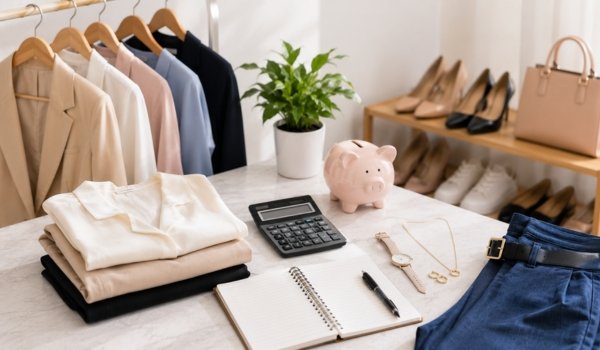
The idea that a professional wardrobe requires a significant financial investment is a common misconception. With a strategic approach, it’s entirely possible to build a polished business casual wardrobe without overspending.
The first step is to audit what you already own. Most people already have several pieces that qualify as business casual—they simply haven’t styled them in a work-appropriate way. A well-fitted white T-shirt under a blazer, dark jeans with pointed-toe flats, or a casual dress belted at the waist can all work as business casual outfits with minimal effort.
Once you’ve identified gaps, prioritize investment pieces. These are the items you’ll wear frequently and that need to hold up over time—a quality blazer, a well-fitted pair of trousers, and a few high-quality blouses. Retailers like Banana Republic, J.Crew, and M.M. LaFleur are known for professional women’s clothing at mid-range price points. For more budget-friendly options, ASOS, Target’s A New Day line, and H&M’s office collections offer surprisingly solid basics.
Neutral colors are your best allies when working with a limited budget. A capsule of black, white, navy, beige, and grey pieces can be combined in a significant number of ways, dramatically reducing the number of individual items you need to buy. From there, you can add seasonal accent colors through accessories—scarves, bags, or earrings—without committing to major purchases.
Thrift stores and resale platforms like ThredUp and Poshmark are also worth exploring. Many high-quality workwear pieces from brands like Ann Taylor, Banana Republic, and Talbots are available secondhand at a fraction of the retail price.
What Are the Most Common Business Casual Mistakes Women Make—and How Can They Be Avoided?
Even with the best intentions, it’s easy to misjudge business casual. Some of the most common mistakes come down to fit, fabric, and context—and most are easy to correct once you know what to look for.
Wearing clothes that don’t fit properly is the single most common issue. Oversized blazers, ill-fitting trousers, or dresses that are too tight all communicate a lack of attention to detail—regardless of the brand or price. Fit is the difference between looking put-together and looking like you grabbed something in a hurry. When in doubt, a tailor can make a significant difference, and the cost is usually minimal.
Relying too heavily on leggings or athleisure is another frequent misstep. While the boundaries of business casual have relaxed in recent years, leggings—particularly thin, everyday-style ones—typically don’t meet the threshold, even in relaxed office environments. Ponte pants or structured leggings specifically designed for professional settings are a better alternative if comfort is the priority.
Neglecting the finishing touches is a subtler mistake. Business casual dressing isn’t just about the main pieces—it’s about the overall presentation. Wrinkled clothing, scuffed shoes, and a lack of basic grooming can undercut an otherwise solid outfit. Taking a few extra minutes to ensure everything is clean, pressed, and intentional makes a meaningful difference.
Finally, ignoring the specific context of an event is worth flagging. Business casual for a regular Tuesday in the office is not the same as business casual for a client meeting, a job interview, or a company event. Dressing slightly more formally for higher-stakes occasions is always the safer choice.
How Do Accessories and Color Choices Elevate a Business Casual Outfit for Women?
Accessories are often underestimated, but they play a significant role in how an outfit reads in a professional setting. The right accessories can make a simple outfit look intentional and curated. The wrong ones—or too many—can make even a well-chosen outfit look cluttered or inappropriate.
For jewelry, the general business casual principle is less is more. Stud earrings, simple hoop earrings, a delicate necklace, or a classic watch are all appropriate and versatile choices. Statement pieces can work well in creative environments but should be worn one at a time to avoid overwhelming the overall look.
Bags should be structured and functional. A tote bag, a leather shoulder bag, or a small crossbody in a neutral color are all appropriate for a business casual setting. Avoid bags that are too casual (canvas tote bags with graphics) or too formal (hard-shell clutches) unless the occasion specifically calls for it.
Color psychology also plays a role in professional dressing. Navy and dark blue are consistently associated with trustworthiness and authority. Black conveys sophistication. Camel and beige read as approachable and modern. Blush and soft pastels add warmth without being distracting. Incorporating these colors thoughtfully—especially in key pieces like blazers and trousers—can subtly reinforce the professional image you want to project.
What Is the Future of Business Casual for Women—and How Is Workplace Fashion Evolving?
Workplace fashion for women has shifted considerably over the past decade, and the changes show no signs of slowing down. The COVID-19 pandemic, the rise of hybrid working models, and broader cultural conversations about workplace identity have all contributed to a rethinking of what “professional” actually means.
The most notable shift is the move toward comfort-forward professionalism. Wide-leg trousers, relaxed-fit blazers, and soft suiting fabrics have replaced rigid, heavily structured pieces as the norm in many offices. Brands like Everlane, Vince, and Cos have built significant followings by offering exactly this—clothing that feels relaxed but looks intentional.
There’s also a growing emphasis on sustainability and slow fashion in professional wardrobes. Rather than building a large collection of disposable workwear, more women are investing in fewer, better pieces that are designed to last. This aligns closely with the capsule wardrobe approach, which prioritizes quality, versatility, and longevity over trend-driven consumption.
Finally, workplace dress codes are becoming increasingly individualized. More organizations now recognize that allowing employees to express their personal style within professional guidelines leads to higher morale and a stronger sense of belonging. Business casual, in this sense, is evolving from a rigid set of rules into a flexible framework—one that values professionalism without demanding conformity.
Your Business Casual Wardrobe Starts With One Good Decision
Dressing for work doesn’t have to be stressful. Business casual, at its core, is about looking put-together, feeling comfortable, and communicating that you take your role seriously. The specific pieces you choose matter less than the overall impression they create.
Start with a small collection of well-fitted basics, understand your industry’s expectations, and build from there. Over time, your business casual wardrobe will become less of a daily puzzle and more of a quiet confidence—a set of tools you reach for automatically because you know they work.
The best outfit is always the one you feel good in. Make that your starting point.
Frequently Asked Questions About Business Casual for Women
What is business casual for women, exactly?
Business casual for women is a dress code that sits between formal business attire and casual wear. It typically includes tailored trousers, blouses, blazers, midi skirts, and clean professional footwear. The specific definition varies by industry and workplace culture.
Are jeans considered business casual for women?
In some workplaces, dark-wash, straight-leg or slim-fit jeans without rips or distressing can qualify as business casual—particularly in creative or tech industries. In more conservative environments, jeans are generally not considered business casual. When in doubt, default to trousers.
What shoes are appropriate for a business casual dress code?
Loafers, block heels, pointed-toe flats, ankle boots, and clean leather sneakers (in relaxed offices) are all appropriate for business casual settings. Avoid stilettos, flip-flops, and very casual athletic shoes unless your workplace culture explicitly supports them.
Can women wear dresses for business casual?
Yes. Midi wrap dresses, sheath dresses, and tailored shirt dresses are all excellent business casual options. The key is ensuring the hemline falls at or below the knee and the neckline is modest enough for a professional setting.
How is business casual different from smart casual for women?
Business casual leans more formal and is specifically tied to workplace expectations. Smart casual is a broader, more flexible category that works for social and semi-formal settings outside of work. A blazer and tailored trousers are business casual; a stylish blouse with clean jeans and heels might read as smart casual.
What colors work best for a business casual wardrobe?
Neutral tones—black, navy, grey, white, camel, and beige—form the most versatile foundation. Accent colors like blush, sage, burgundy, and forest green can add personality without being distracting. The goal is a palette where every piece can work with multiple others.
