
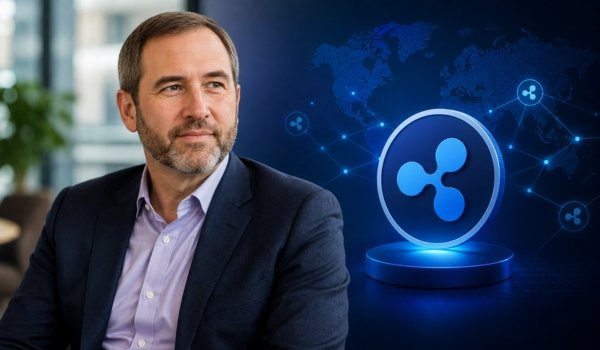
Brad Garlinghouse is the CEO of Ripple Labs, the blockchain payments company behind XRP. Known for his outspoken views on crypto regulation and his leadership through Ripple’s high-profile legal battle with the SEC, Garlinghouse has become one of the most influential figures in the digital asset industry.
Few names carry as much weight in the cryptocurrency world as Brad Garlinghouse. He has led Ripple Labs through explosive growth, a landmark lawsuit, and years of regulatory uncertainty—and he’s still standing. Whether you follow crypto casually or obsessively, understanding who Garlinghouse is and what he stands for helps explain why Ripple and XRP continue to shape the broader conversation around digital finance.
This article covers his early career, his rise to Ripple’s top position, his role in the SEC lawsuit, and what his vision means for the future of cross-border payments. By the end, you’ll have a clear picture of one of the most consequential voices in blockchain today.
Who Is Brad Garlinghouse and What Is His Background Before Ripple?
Brad Garlinghouse was born in 1971 and grew up in Topeka, Kansas. He earned a bachelor’s degree from the University of Kansas and later completed an MBA from Harvard Business School—a credential that would serve as the foundation for an impressive corporate career.
His professional life took off at AOL, where he served as Senior Vice President and oversaw a range of consumer products. But his name really entered the tech lexicon in 2006 when he published an internal memo at Yahoo! that became known as the “Peanut Butter Manifesto.” In it, Garlinghouse argued that Yahoo! was spreading its resources too thin—like peanut butter scraped across too many slices of bread—resulting in mediocrity across the board. The memo was leaked to The Wall Street Journal and went viral, earning Garlinghouse a reputation as someone willing to say what others wouldn’t.
After Yahoo!, he took leadership roles at Hightail (formerly YouSendIt) and later joined Ripple in 2015 as President and COO, before stepping into the CEO role in 2017. That transition marked the beginning of the chapter he is most known for today.
How Did Brad Garlinghouse Transform Ripple Into a Global Payments Leader?
When Garlinghouse became CEO, Ripple was already positioning itself as a blockchain solution for international bank transfers—a space dominated by the decades-old SWIFT network. Under his leadership, Ripple aggressively expanded its partnerships with financial institutions around the world.
By leveraging XRP as a bridge currency, Ripple’s payment protocol, RippleNet, allows banks and payment providers to settle cross-border transactions in seconds rather than days, and at a fraction of the cost of traditional wire transfers. Garlinghouse has consistently framed this not as a disruption to banks, but as a tool for them.
“We are not trying to replace the existing financial system,” Garlinghouse has said in multiple interviews. “We’re trying to make it work better.”
This pragmatic approach—partnering with banks rather than battling them—set Ripple apart from many other crypto companies that took a more adversarial stance toward traditional finance. Under his direction, Ripple secured partnerships with financial giants including Santander, PNC Bank, and SBI Holdings in Japan, expanding RippleNet to more than 55 countries.
By 2021, Ripple was valued at approximately $15 billion, cementing Garlinghouse’s status as one of the most effective leaders in the crypto industry.
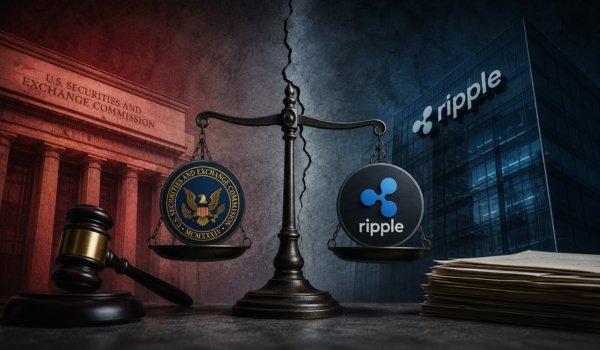
What Happened During the SEC Lawsuit Against Brad Garlinghouse and Ripple?
In December 2020, the U.S. Securities and Exchange Commission (SEC) filed a lawsuit against Ripple Labs, Brad Garlinghouse, and co-founder Chris Larsen, alleging that XRP was an unregistered security. The complaint claimed Ripple had raised over $1.3 billion through an unregistered securities offering—an accusation that sent XRP’s price tumbling and caused major U.S. exchanges to delist the token.
Garlinghouse did not back down. He became one of the most vocal critics of what he called regulatory overreach, arguing publicly and persistently that the SEC’s approach was stifling American innovation in crypto while other countries moved forward with clearer frameworks.
“The U.S. is falling behind,” he warned in numerous interviews and on social media. “Other countries are providing regulatory clarity. The U.S. isn’t, and that’s a competitive disadvantage.”
In July 2023, U.S. District Judge Analisa Torres delivered a partial victory for Ripple, ruling that XRP sold on public exchanges did not constitute a security under federal law. The ruling was widely seen as a landmark moment for the entire crypto industry, not just Ripple. While the case continued in some forms beyond that ruling, the decision validated much of what Garlinghouse had argued for three years.
The lawsuit reshaped how many in the crypto industry view SEC enforcement actions, and Garlinghouse’s willingness to fight rather than settle earned him considerable respect among crypto advocates. For a deeper look at the ruling and its implications, read this detailed breakdown of the XRP court decision or explore Ripple’s official statements on the case.
What Does Brad Garlinghouse Believe About the Future of Crypto Regulation?
Regulation is arguably Brad Garlinghouse’s most consistent talking point. He believes the United States desperately needs a clear, workable regulatory framework for digital assets—and he’s made this case to Congress, in op-eds, and across media appearances.
His position is nuanced. He doesn’t oppose regulation outright; in fact, he frequently argues that well-designed rules would benefit the industry by providing the certainty that institutional investors need to participate. What he opposes is what he describes as “regulation by enforcement”—the practice of defining rules through lawsuits rather than legislation.
Garlinghouse has been an active participant in Washington policy discussions, meeting with lawmakers and regulators to push for clearer guidelines. He supported the passage of the Financial Innovation and Technology for the 21st Century Act (FIT21), which passed the House in 2024 and was seen as a meaningful step toward crypto regulatory clarity in the U.S.
He has also spoken favorably about regulatory environments in countries like Singapore, the UK, and the UAE, suggesting that if the U.S. fails to act, crypto companies will simply move their operations elsewhere. Ripple itself opened offices in multiple international markets partly in response to U.S. regulatory uncertainty.
How Has Brad Garlinghouse’s Leadership Style Shaped Ripple’s Culture?
Those who’ve worked with Garlinghouse describe a leadership style defined by directness, competitive drive, and long-term thinking. His Peanut Butter Manifesto—written nearly two decades ago—revealed a leader who prioritizes focus over sprawl and accountability over comfort.
At Ripple, this has translated into a company culture that moves quickly and communicates clearly. Garlinghouse regularly engages with the public on social media platform X (formerly Twitter), where he has amassed millions of followers. He uses the platform to share industry commentary, respond to critics, and advocate for policy change—a level of public engagement unusual for a CEO of his stature.
He has also been vocal about Ripple’s commitment to sustainability, noting that XRP’s consensus mechanism uses significantly less energy than proof-of-work systems like Bitcoin. In a 2021 blog post, Ripple pledged to be carbon net-zero by 2030—a commitment that reflects Garlinghouse’s belief that environmental responsibility and blockchain innovation are not in conflict.
What Are Brad Garlinghouse’s Goals for Ripple Moving Into the Future?
Garlinghouse has outlined an ambitious roadmap for Ripple that extends well beyond XRP payments. In recent years, Ripple has expanded into tokenization of real-world assets, central bank digital currencies (CBDCs), and decentralized finance (DeFi) applications built on the XRP Ledger.
In 2023, Ripple launched its own USD-pegged stablecoin, Ripple USD (RLUSD), signaling a move deeper into the stablecoin market and further broadening the company’s product portfolio.
Garlinghouse has also spoken about the possibility of a Ripple IPO, though he has stopped short of setting a firm timeline. He has said the company would consider going public once the regulatory environment in the U.S. provides sufficient clarity—effectively tying that milestone to the broader legislative progress he has been advocating for.
His overarching goal, stated plainly and often, is for the Internet of Value to become a reality—a financial internet where money moves as freely, quickly, and cheaply as information does today. Whether or not that vision fully materializes, Garlinghouse has already helped make cross-border payments faster and cheaper for millions of people worldwide.
For more on where Ripple is headed, visit Ripple’s official insights blog.
What Brad Garlinghouse’s Story Tells Us About Leadership in the Crypto Era
Brad Garlinghouse didn’t stumble into the crypto space. He arrived with a track record, a point of view, and a willingness to fight for both. His journey from Yahoo! boardrooms to the front lines of a landmark SEC lawsuit captures something important about what it takes to lead in an industry as volatile and contested as blockchain.
He has made Ripple a company that governments negotiate with, not around. He has turned a regulatory battle into a public conversation about American competitiveness. And he has done it without abandoning the core belief that blockchain’s best use case is solving real problems for real financial institutions.
Whether you’re a crypto enthusiast, a skeptical outsider, or a policy professional trying to understand what responsible digital asset leadership looks like, Garlinghouse is worth paying attention to. His decisions over the next few years will help determine not just Ripple’s fate, but how the U.S. positions itself in the global race to define the future of money.
Frequently Asked Questions About Brad Garlinghouse
Who is Brad Garlinghouse?
Brad Garlinghouse is the CEO of Ripple Labs, the blockchain technology company behind XRP and the RippleNet global payments network. He previously held senior roles at Yahoo! and AOL, and is widely regarded as one of the most prominent voices in the cryptocurrency industry.
What is the Peanut Butter Manifesto?
The Peanut Butter Manifesto is an internal memo Garlinghouse wrote while at Yahoo! in 2006. It criticized the company for spreading its resources too thin across too many projects, resulting in a lack of strategic focus. The memo was leaked to the press and became a well-known example of corporate candor.
What was the outcome of the SEC lawsuit involving Brad Garlinghouse?
In July 2023, a U.S. federal judge ruled that XRP sold on public exchanges did not constitute a security, delivering a significant partial victory for Ripple and Garlinghouse. The ruling is considered a landmark decision for the broader cryptocurrency industry.
What does Brad Garlinghouse think about crypto regulation?
Garlinghouse supports clear, legislation-based regulation for digital assets. He opposes “regulation by enforcement,” arguing that using lawsuits to define rules creates uncertainty and drives crypto companies to more favorable jurisdictions outside the U.S.
Is Ripple planning an IPO?
As of the latest public statements, Garlinghouse has said Ripple may pursue an IPO but has linked that decision to achieving greater regulatory clarity in the United States. No firm timeline has been announced.
What is RLUSD?
RLUSD is Ripple’s USD-pegged stablecoin, launched in 2023. It represents Ripple’s expansion into the stablecoin market and is part of the company’s broader strategy to offer a wider range of financial products built on the XRP Ledger.
