
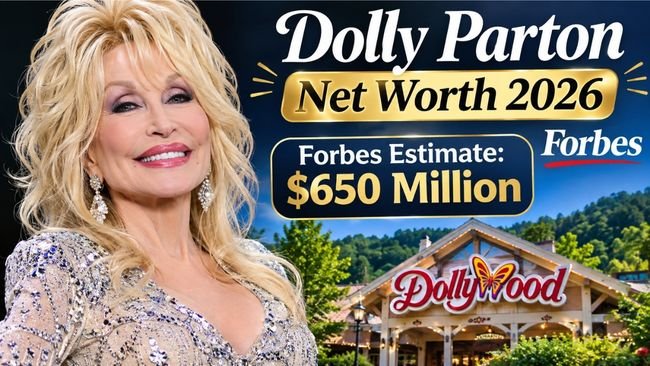
Dolly Parton’s net worth was estimated at $450 million by Forbes, which published that figure in June 2025 as part of its ranking of America’s richest self-made women. Several outlets report that she died in Nashville on August 25, 2026, at the age of 80, and describe the $450 million figure as the estimate of her fortune at that time, a figure built up over roughly six decades in the entertainment industry. Other publications have put her wealth considerably higher, up to $650 million, reflecting different assumptions about the value of her business holdings. Her largest single asset was her stake in the Dollywood theme park, followed by her music catalog, two very different kinds of assets that together illustrate how unusually diversified her business interests were compared with most musicians of her generation.
How much was Dolly Parton worth?
| Source | Estimate | Notes |
|---|---|---|
| Forbes (June 2025) | $450 million | America’s Richest Self-Made Women |
| Celebrity Net Worth (via Parade and InvestorMint) | About $650 million | Upper-end figure used by many outlets |
| Industry Hackerz | $450 million | Detailed breakdown below |
Forbes’ figure is generally treated as the strongest publicly available estimate, since Forbes applies a more rigorous methodology to its rich lists than most entertainment outlets. Details of her estate, including exactly how her assets will be distributed, have not been made public as of the most recent reporting.
What made up her fortune?
One detailed breakdown of the $450 million estimate, published by Industry Hackerz, splits her wealth roughly as follows:
| Asset | Estimated value |
|---|---|
| Dollywood stake (about 50%) | About $165 million |
| Music catalog | About $150 million |
| Consumer products and other | About $100 million |
| Splash Country water park | About $20 million |
| DreamMore Resort and Spa | About $15 million |
Forbes separately valued her catalog of more than 3,000 songs at around $120 million in 2025, a slightly lower figure than the Industry Hackerz breakdown but one that comes from the same general source of information about her songwriting output. Critically, Parton kept the rights to all of her own songs throughout her career, a decision that distinguishes her from many artists who signed away publishing rights early in their careers and never fully recovered that ownership. Because she retained those rights, she continued earning royalties from her own standards, including songs she wrote decades earlier, for as long as they kept generating airplay, streaming, and licensing income.
What is Dollywood?
Parton was among the partners who launched the Pigeon Forge, Tennessee, theme park in 1986, after it was converted and rebranded from an earlier, less successful park on the same site. As of July 2026, Dollywood attracted about 3 million visitors a year, according to Inc., as reported by MoneyLion, a substantial figure for a regional theme park located well outside a major metropolitan area. The park, along with its associated resort and water park, made up the single largest component of her broader business holdings, and its steady visitor numbers over nearly four decades reflect a brand built as much around Parton’s own personal popularity and warmth as around the rides and attractions themselves.
Did she give away her money?
TheWealthAdvisor published a piece with a headline noting she died worth $450 million and may have given away even more, pointing to her extensive philanthropy, most notably the Imagination Library, a program she founded that sends free books to children from birth until they start school, operating across multiple countries. The $450 million net worth estimate reflects only what she retained; it does not count the substantial sums she donated or gave away over her lifetime through this and other charitable efforts, meaning her actual lifetime earnings and generosity, taken together, were considerably larger than the headline net worth figure alone suggests.
How did her wealth compare with other country and pop stars of her generation?
Among artists primarily associated with country music, Parton’s estimated net worth placed her well ahead of most of her direct peers, in large part because of Dollywood and her consumer products business rather than music royalties alone. Compared with pop artists from more recent eras who built nine and ten-figure fortunes through streaming-era touring economics, her wealth looks more modest, a reflection of how differently the music business has monetized artists across different decades. Parton’s career began in an era when songwriting royalties and physical album sales, rather than massive stadium tours or billion-dollar streaming deals, were the dominant way a musician built lasting wealth, and her business decisions, particularly around retaining her publishing rights and diversifying into a theme park, reflect strategies suited to that earlier era of the music industry.
A career built across six decades
Parton’s path to this fortune did not come from a single hit or a short window of peak popularity. She released her first single in the 1960s and continued recording, touring, and writing new material well into her seventies, a career length that is rare in the music industry and that gave her far more time than most artists get to accumulate royalties, build a business like Dollywood, and diversify into licensing and consumer products. That longevity is a major, often underappreciated reason her net worth compares favorably with artists who had shorter but more explosively successful careers: steady income compounding over sixty years can add up to a similar or larger total than a few years of enormous but short-lived earnings.
What her estate situation says about privacy and wealth
The fact that details of her estate remain undisclosed is itself fairly typical for a public figure of her wealth and stature. Many high-net-worth individuals structure their estate planning specifically to keep distribution details private, often through trusts rather than a public will, which can mean that even reporters with good access to court records may not be able to confirm exactly how an estate of this size will ultimately be divided among heirs, charitable organizations, or ongoing business interests like Dollywood. Until or unless further filings become public, any claims about exactly who inherits what should be treated as speculation.
Frequently asked questions
What was Dolly Parton’s net worth? Forbes estimated $450 million in June 2025. Other outlets used figures as high as $650 million, depending on how they valued her various business holdings.
Did Dolly Parton die? Several outlets, including IBTimes UK and Tribune, report that she died in Nashville on August 25, 2026, at age 80.
How much of Dollywood did she own? One estimate says about 50%, worth about $165 million as part of her overall net worth.
How much was her music catalog worth? Forbes estimated about $120 million in 2025. A separate breakdown by Industry Hackerz put the figure slightly higher, at $150 million.
Who inherits her estate? Details of her estate and how it will be distributed have not been made public as of the most recent available reporting.
Did Dolly Parton own her own songs? Yes. She retained the rights to her entire catalog of more than 3,000 songs throughout her career, an unusual achievement for an artist of her era and a major factor in her sustained wealth.
What else did Dolly Parton own besides Dollywood? Her broader holdings included the DreamMore Resort and Spa, the Splash Country water park, and a range of consumer products, in addition to her music catalog and real estate.
Sources
- IBTimes UK: Dolly Parton’s $450 million fortune and who will inherit it
- Tribune: Dolly Parton’s net worth at time of death
- RouteNote: How much was Dolly Parton worth?
- InvestorMint: Dolly Parton estimated net worth 2026
- Industry Hackerz: Dolly Parton net worth
- MoneyLion: Dolly Parton’s business empire
- TheWealthAdvisor: Dolly Parton died worth $450 million
- Interaksyon: Behind the rhinestones, Dolly Parton built a business empire
Net worth figures are third-party estimates, not financial advice.
